
Why are Companies Retreating from DEI Training? Is it Legal?
Are companies pulling back from DEI training because the law requires it or because the political climate makes it feel risky to continue?
Over the past year, I’ve watched organizations retreat from training that helps people recognize and address stereotypes and microaggressions. That retreat isn’t abstract. It shows up directly in my business. Longtime clients who once valued this work are now stepping away.
When I ask why, the answers are consistent:
“We don’t want the hassle.”
“People might feel restricted.”
“My leadership is worried about how this will be perceived.”
These aren’t legal concerns. They’re signals of something else.
At the same time, public reporting shows the same pattern at scale. Major companies are reducing or rebranding diversity, equity, and inclusion efforts, not because the law has changed, but because the political environment around this work has.
So I went looking for clarity
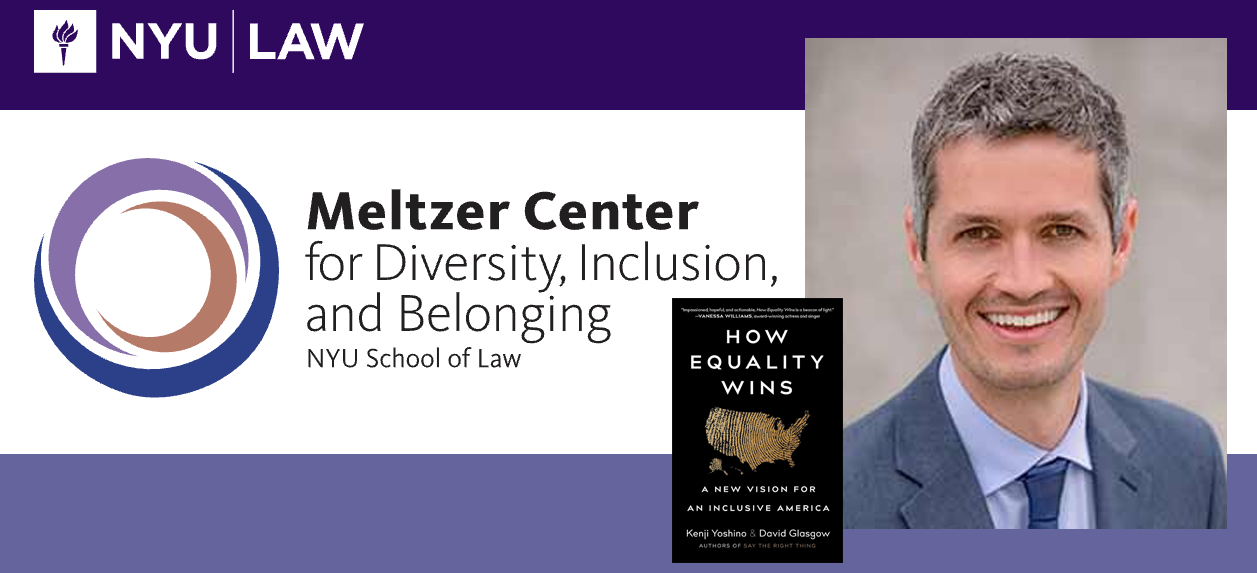
I reached out to David Glasgow, the Executive Director of the Meltzer Center for Diversity, Inclusion, and Belonging and co-author of How Equality Wins (link).
I asked a straightforward set of questions:
• How do organizations continue supporting people in addressing real interpersonal harm without putting themselves in legal jeopardy?
• Are courts actually targeting training about bias, stereotypes, and microaggressions?
• What makes training defensible versus risky?
David's answer was direct: "DEI training initiatives on topics like bias are very legally safe. The lawsuits challenging DEI programs have been among the weakest anti-DEI lawsuits.”
He explained the legal standard: proving hostile work environment requires showing "severe or pervasive climate of harassment or abuse.” Simply asking employees to participate in training about bias does not meet that threshold unless the content is extreme or denigrating toward a particular group.
First Amendment arguments, often raised in public debate, generally don’t apply to private employers and are limited even in public sector contexts. In other words, the legal foundation for this work remains intact.
So why are organizations pulling back?
Glasgow described two patterns. Some organizations misunderstand the law and overcorrect out of caution. Others understand the law but are making decisions based on anticipated backlash. As he put it, the pullback is often driven more by political considerations than legal ones.
That distinction matters. Because, from my perspective, what’s happening right now is not a legal shift. It’s a behavioral one. Organizations are responding to pressure, not requirements. They are adjusting to a political environment where addressing bias is more likely to attract scrutiny than ignoring it. And in that environment, removing training can feel safer than continuing it.
But that choice has consequences
Workplace bias is not just a matter of interpersonal discomfort. Decades of research show that bias shapes hiring decisions, performance evaluations, discipline, and advancement. It influences who is heard, who is trusted, and who is given opportunity.
When left unaddressed, those patterns don’t disappear. They compound. Training that helps employees recognize and respond to bias is one of the few proactive tools organizations have to interrupt those patterns before they escalate into formal complaints or legal claims.
That’s where the legal reality becomes more complicated than the current narrative suggests. Employers are not required to run any specific training program. But they are expected to prevent discrimination and harassment.
When claims arise, organizations often need to demonstrate that they took reasonable steps to prevent harm. Removing prevention-focused training doesn’t reduce that responsibility. It may weaken an organization’s ability to show that it met it.
Yet many organizations are moving in the opposite direction
They are renaming programs, softening language, or eliminating training altogether. Public filings reflect this shift, with fewer references to diversity, equity, and inclusion and fewer metrics tied to accountability. These changes are often framed as strategic adjustments. In practice, they reflect a broader effort to avoid political risk.
That avoidance creates a gap. The legal expectation to prevent workplace harm remains. The tools to do so are being reduced. And the decision to step back is being made in response to pressure that has little to do with the actual legal standard. That’s the reality organizations are operating in.
The question is no longer whether training on bias is legally defensible.
IT IS.
The question is whether organizations will act on that reality, equip their people with the skills to prevent harm, and meet their obligations in practice, or continue to make decisions based on a perception of risk driven more by politics than by law.
In this environment, many organizations are asking what they can still do. One clear answer is skill-building.
Programs like Ouch! That Stereotype Hurts and Disarming Microaggressions are not about labeling or restricting people. They are communication-based eLearning courses that teach practical skills: how to recognize when something harmful has been said, how to respond in the moment or later, and how to keep conversations respectful and productive rather than escalating.
These are the same skills organizations rely on every day to maintain professional, respectful workplaces.
They help employees address issues early, before they turn into formal complaints or deeper conflict. And they give people language to navigate difficult moments in ways that support both accountability and working relationships.
In a time when many organizations are stepping back from anything labeled “DEI,” the need for these skills hasn’t gone away.
If anything, it has increased. People are still interacting, still making decisions, still navigating differences. The question is whether they have the tools to do that well.
Contact me to talk about your DEI training (whatever you call it). We have some great courses on communication skills.
Subscribe to my newsletter Culture of Belonging!
Courses

Copyright © 2025